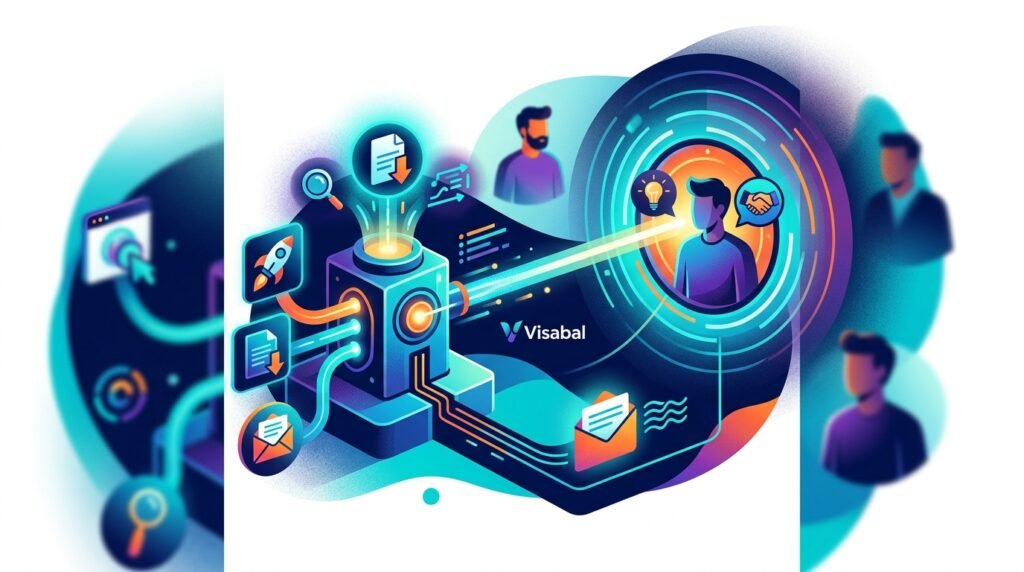
Timing is one of the biggest differences between outreach that gets ignored and outreach that creates a real sales conversation. A prospect may not respond to a generic cold email today, but if they just hired a new VP, raised funding, visited a pricing page, posted about a problem, or changed technology vendors, the context changes. That is where trigger based outreach software becomes valuable.
Trigger based outreach software helps sales, marketing, and growth teams identify meaningful events, also called buying signals, and use those events to launch relevant outreach. Instead of sending the same message to a static list, teams can reach people when there is a timely reason to talk.
For teams using Visabal, the goal is simple: make outreach feel more relevant, more useful, and better timed. This guide explains what trigger based outreach software is, which triggers matter, how it improves performance, and how to build a practical trigger based outreach workflow.
What Is Trigger Based Outreach Software?
Trigger based outreach software is a system that monitors prospect, company, or account activity and automatically starts outreach when a defined event occurs. The event could be a company announcement, a website behavior, a job change, a new technology signal, or a CRM activity.
For example, a sales team might create an outreach sequence that begins when:
- A target account raises a funding round
- A prospect changes jobs and joins a company in the ideal customer profile
- A lead visits a high-intent page, such as pricing or demo
- A company posts a new role related to a problem your product solves
- A current customer expands into a new market
- A target account starts using a complementary tool
- A prospect engages with an email, social post, or webinar
The software detects the trigger, matches it to an outreach rule, and helps the team send a message that references the event. The result is outreach that feels less random and more connected to the prospect’s current priorities.
Why Trigger Based Outreach Works
Most outbound campaigns fail because they are built around the seller’s schedule, not the buyer’s situation. The seller wants meetings this week, so they send emails this week. But the buyer may not have urgency, budget, or a reason to respond.
Trigger based outreach changes that by aligning messages with real-world context. When a company announces expansion, hires a new leader, launches a product, or shows high-intent behavior, there is a clearer reason to reach out.
This improves outreach in four important ways:
- Better relevance: The message can reference something specific and recent.
- Stronger timing: The prospect is more likely to be dealing with a related priority.
- Higher personalization at scale: Teams can personalize around a trigger instead of writing every message from scratch.
- Cleaner prioritization: Sales reps can focus on accounts showing activity instead of guessing who to contact next.
A message that says, “Congrats on the new enterprise sales hiring push. Teams often revisit outbound systems at that stage,” is more compelling than a generic pitch sent to every company in a database.
Common Types of Outreach Triggers
The best trigger based outreach software supports multiple signal types. Not every trigger has the same value, so teams should choose triggers that match their audience, sales cycle, and offer.
1. Company Growth Triggers
Growth events often create operational pressure. These include funding announcements, hiring spikes, new office openings, market expansion, mergers, and product launches. If your solution helps companies scale, improve workflows, or reduce complexity, these are high-value triggers.
2. Leadership and Job Change Triggers
When executives or department leaders join a company, they often evaluate existing tools, processes, vendors, and team performance. A new sales leader may review pipeline generation. A new marketing leader may evaluate campaign systems. A new operations leader may look for efficiency gains.
Trigger based outreach can help you reach these leaders during their first 30 to 90 days, when they are more open to change.
3. Website and Intent Triggers
If a prospect visits your pricing page, demo page, product comparison page, or case study, that behavior may indicate active interest. These triggers are especially useful for inbound-led or product-led teams.
A timely follow-up can be simple and helpful: “Noticed there may be interest in outreach automation. Happy to share what teams usually compare when evaluating trigger based workflows.”
4. Technology and Stack Triggers
Some companies adopt tools that signal a broader initiative. For example, a company adding a CRM, sales engagement platform, data warehouse, or marketing automation tool may also need better outreach workflows.
Technology triggers can also identify competitive displacement opportunities, complementary integrations, or accounts with the infrastructure needed to adopt your solution.
5. Engagement Triggers
Engagement triggers come from interactions with your own content and campaigns. These include email opens, link clicks, webinar attendance, form submissions, content downloads, social engagement, or repeat website visits.
These triggers are useful because the prospect has already interacted with your brand. However, teams should avoid overreacting to weak signals. A single email open is rarely enough. Multiple actions across a short time period are more meaningful.
6. Pain or Need Triggers
Some triggers reveal a direct business problem. Job posts can be excellent examples. If a company is hiring several outbound sales reps, they may need better prospecting, sequencing, data quality, or outreach operations. If a company is hiring customer support staff quickly, they may have scaling challenges.
These triggers work best when your message connects the event to a likely business issue without sounding invasive or presumptive.
What to Look For in Trigger Based Outreach Software
Not all tools are equal. Some only send alerts. Others support full workflow automation, personalization, enrichment, and campaign execution. When evaluating trigger based outreach software, look for these capabilities:
Accurate Signal Detection
The software should capture relevant triggers from reliable sources and minimize false positives. Bad data leads to awkward outreach. Good trigger data helps your team act with confidence.
CRM and Workflow Integration
Trigger based outreach should connect with the systems your team already uses. That may include your CRM, email platform, sales engagement tool, website analytics, or lead database. Without integration, triggers become another dashboard reps forget to check.
Segmentation and Rules
Different triggers should create different actions. A pricing page visit may require fast follow-up. A funding announcement may start an account-based sequence. A job change may create a reconnect message. Strong software lets you define rules by trigger type, company size, persona, industry, territory, and lifecycle stage.
Personalization Support
The best systems help reps use the trigger in the message. This may include dynamic fields, suggested talking points, account context, or AI-assisted copy. The trigger should not just start the outreach; it should improve the outreach.
Sequence Automation
A single email is rarely enough. Trigger based outreach software should help teams create multi-step sequences across email, LinkedIn, calls, and tasks while still keeping the message relevant.
Reporting and Attribution
Teams need to know which triggers produce replies, meetings, opportunities, and revenue. Reporting helps you double down on high-performing signals and eliminate noisy ones.
How to Build a Trigger Based Outreach Workflow
A strong workflow does not start with automation. It starts with strategy. Here is a practical approach Visabal recommends for teams building trigger based outreach.
Step 1: Define Your Ideal Customer Profile
Triggers only matter if they happen at the right accounts. Start by defining firmographics, industries, company sizes, regions, technologies, and buyer roles that match your best customers.
Step 2: Choose High-Intent Triggers
Pick three to five triggers that strongly relate to your value proposition. Avoid tracking everything at once. Too many triggers create noise and reduce rep focus.
Step 3: Map Each Trigger to a Message Angle
For every trigger, answer: Why does this event matter, and how can we help? For example:
- Funding round: scaling teams need repeatable pipeline systems
- New sales leader: new leadership often evaluates outbound performance
- Pricing page visit: buyer may be comparing outreach tools
- Hiring SDRs: team may need better prospecting and sequencing workflows
Step 4: Create Trigger-Specific Sequences
Build short sequences that reference the trigger early. The first message should be direct, helpful, and relevant. Follow-ups should add value instead of repeating the same pitch.
Step 5: Add Human Review Where Needed
Automation should accelerate outreach, not remove judgment. For high-value accounts, route triggers to a rep for review before sending. This gives the rep a chance to tailor the message and avoid mistakes.
Step 6: Measure by Trigger Type
Track reply rate, positive reply rate, meetings booked, opportunity creation, and revenue by trigger. Over time, your team will learn which signals truly predict buyer readiness.
Example Trigger Based Outreach Email
Subject: Congrats on the sales hiring push
Hi Jordan,
Saw that your team is hiring several outbound sales roles. Teams usually hit a point where rep activity increases faster than outreach quality, especially when sequences, data, and timing are managed separately.
Visabal helps teams build more relevant outreach workflows around real buying signals, so reps can focus on the right accounts at the right time.
Would it be useful to compare how teams typically structure trigger based outreach when scaling outbound?
Best,
Visabal Team
This message works because it is tied to a specific business event, explains why the event matters, and offers a relevant conversation without overclaiming.
Best Practices for Trigger Based Outreach
To get the most from trigger based outreach software, follow these principles:
- Use the trigger as context, not a gimmick. Mention the event naturally and connect it to a business reason.
- Prioritize quality over volume. Trigger based outreach performs best when the trigger is meaningful.
- Avoid sounding automated. Even automated workflows should read like thoughtful human messages.
- Respect privacy and compliance. Use appropriate data sources and follow applicable email and outreach regulations.
- Keep messages concise. The trigger should make the message clear, not longer.
- Test one variable at a time. Compare triggers, subject lines, personas, and offers systematically.
Trigger Based Outreach vs. Traditional Cold Outreach
Traditional cold outreach usually starts with a list. Trigger based outreach starts with a reason. That difference changes the quality of the conversation.
Cold outreach can still work, but it often requires higher volume because many prospects are not in-market. Trigger based outreach focuses effort on accounts where something has changed. That change creates a natural opening.
The most effective teams use both. They maintain consistent outbound activity while using triggers to prioritize the best accounts and personalize the highest-value messages.
How Visabal Supports Smarter Outreach
Visabal helps teams think beyond one-size-fits-all messaging. With trigger based outreach, the focus is on relevance: who to contact, why now, and what message will make sense given the prospect’s situation.
Whether your team is building outbound campaigns, improving lead follow-up, or creating account-based workflows, trigger based outreach software can help turn scattered signals into structured action. The result is a more disciplined outreach motion that respects the buyer’s context and gives your team a better chance of starting meaningful conversations.
Final Thoughts
Trigger based outreach software is not just an automation tool. It is a way to make sales and marketing communication more timely, relevant, and useful. By monitoring the right buying signals and connecting them to thoughtful outreach, teams can reduce wasted activity and focus on prospects with a stronger reason to engage.
If your outreach still depends on static lists and generic sequences, now is the time to rethink the workflow. Start with a few high-value triggers, build focused messages around them, and measure which signals lead to real conversations. With the right strategy and tools, trigger based outreach can become one of the most effective ways to create pipeline.
Frequently asked questions
What is trigger based outreach software?
Trigger based outreach software monitors prospect or account events, such as funding, job changes, website visits, hiring activity, or engagement, and uses those events to start timely, relevant outreach workflows.
Why is trigger based outreach more effective than generic cold outreach?
It gives sales and marketing teams a timely reason to contact a prospect. Messages can reference a real event or buying signal, which makes outreach feel more relevant and increases the chance of a response.
What are examples of outreach triggers?
Common triggers include funding announcements, executive job changes, pricing page visits, webinar attendance, new job postings, technology changes, company expansion, email engagement, and product launches.
Who should use trigger based outreach software?
Sales teams, marketing teams, growth teams, account-based marketing teams, and customer success teams can use trigger based outreach software to prioritize accounts and personalize communication based on meaningful signals.
How should a team start with trigger based outreach?
Start by defining your ideal customer profile, choosing three to five high-value triggers, mapping each trigger to a relevant message angle, building short outreach sequences, and measuring performance by trigger type.