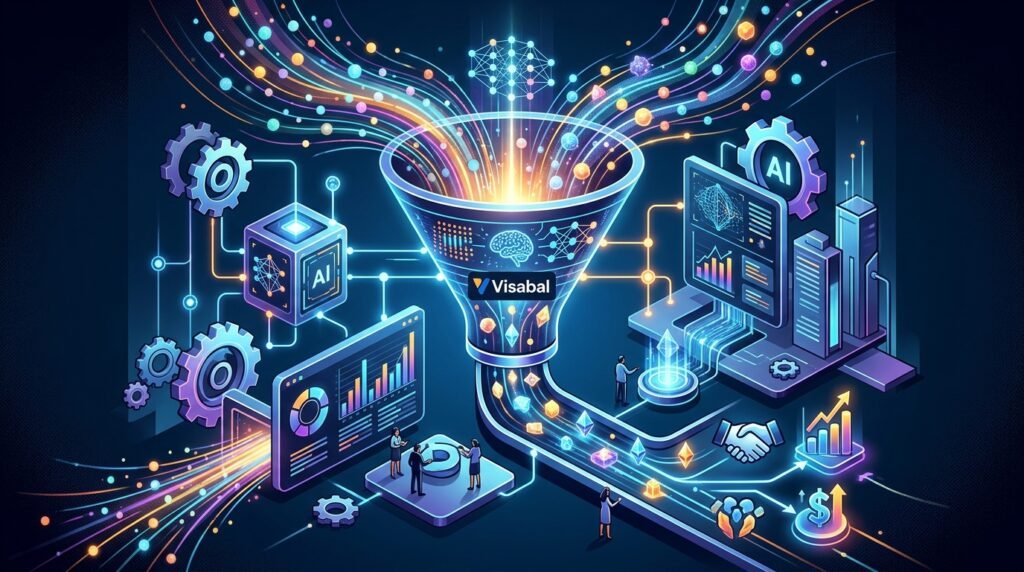
AI lead generation software helps companies identify potential buyers, capture interest, qualify demand, and move the right leads into sales conversations faster. For teams under pressure to grow pipeline without adding headcount, it can be a major advantage. But the best results do not come from simply adding AI to every step of the funnel. They come from using AI where it improves speed, accuracy, and relevance.
For Visabal, the practical goal is simple: help revenue teams spend less time sorting through noise and more time engaging people who are likely to become customers. This article explains what AI lead generation software is, how it works, what features to look for, and how to choose a platform without creating a messy or impersonal buying experience.
What Is AI Lead Generation Software?
AI lead generation software is a category of tools that uses artificial intelligence, machine learning, automation, and data enrichment to help businesses generate and qualify leads. Depending on the platform, it may help with website visitor identification, form optimization, lead scoring, chatbot qualification, data enrichment, intent signals, segmentation, routing, personalization, and follow-up workflows.
The key difference between traditional lead generation tools and AI-powered platforms is adaptability. A traditional form or CRM workflow usually follows static rules. AI lead generation software can analyze patterns across behavior, firmographics, engagement, and historical conversion data to recommend which leads deserve attention and what action should happen next.
That does not mean AI replaces marketing or sales judgment. Instead, it acts as an intelligence layer across your demand generation process.
What AI Lead Generation Software Actually Does
The best AI lead generation systems usually support several parts of the funnel, not just one. Common use cases include:
1. Identifying anonymous website visitors
Some platforms can match anonymous website traffic to company-level data, helping teams understand which accounts are researching their solution. This is especially useful for B2B companies with meaningful website traffic but low form-fill rates.
2. Enriching lead records
AI tools can append missing company size, industry, job title, location, technology usage, funding data, and other context. This makes it easier to segment leads and avoid treating every form submission the same way.
3. Scoring and prioritizing leads
Instead of relying only on generic rules such as job title or company size, AI lead scoring can evaluate multiple signals together. A lead who visits pricing, downloads a comparison guide, and works at a company matching your ideal customer profile should probably be prioritized over a casual newsletter subscriber.
4. Qualifying inbound demand
AI chatbots and conversational forms can ask relevant questions, route prospects, and book meetings when a lead meets qualification criteria. This reduces friction for high-intent visitors and prevents sales teams from manually chasing poor-fit inquiries.
5. Personalizing follow-up
AI can help tailor email copy, landing page experiences, offers, and sales talking points based on the lead’s industry, company stage, behavior, or pain points. Used well, this makes outreach feel more relevant. Used poorly, it becomes generic automation at scale.
6. Improving conversion paths
AI can analyze where people drop off, which forms create friction, and which calls to action generate qualified leads. Over time, it helps teams improve conversion rates without simply increasing ad spend.
AI Lead Generation vs. AI Prospecting vs. AI Outbound
These terms are often used interchangeably, but they are not the same.
AI lead generation software is broader. It includes the systems used to capture, qualify, enrich, and convert leads across inbound, paid, organic, partner, and event channels.
AI sales prospecting is more focused on finding and researching potential buyers before a sales conversation begins. If your priority is building better account and contact lists, Visabal has a deeper guide on how teams can find better-fit accounts before outreach begins.
AI outbound software focuses on sequencing, messaging, deliverability, and outreach workflows. If your challenge is scaling outbound without damaging your reputation, read our breakdown of automating cold email and multichannel outreach responsibly.
AI growth software is the broader operating system across marketing, sales, and revenue operations. For teams thinking beyond lead capture and toward the full revenue engine, Visabal also explains how to approach building a broader AI-powered revenue engine.
Core Features to Look For
Not every AI lead generation platform needs every feature. The right choice depends on your funnel, market, sales motion, and data maturity. Still, most strong platforms include some combination of the following:
- Lead capture tools: Forms, chat, popups, landing pages, or meeting booking flows.
- Data enrichment: Automatic completion of firmographic, demographic, and technographic fields.
- AI lead scoring: Predictive or behavioral scoring based on fit and intent.
- Segmentation: Dynamic lists based on attributes, behavior, and lifecycle stage.
- Intent and engagement signals: Website activity, content consumption, ad engagement, or third-party intent data.
- CRM integration: Syncing with systems like HubSpot, Salesforce, or Pipedrive.
- Workflow automation: Routing, alerts, nurturing sequences, and sales handoffs.
- Personalization: Dynamic messaging, content recommendations, or AI-assisted copy.
- Analytics: Reporting on conversion rates, lead quality, source performance, and pipeline contribution.
The most important feature is not the flashiest AI capability. It is the ability to improve decision-making at the exact point where leads are captured, qualified, or routed.
How to Evaluate AI Lead Generation Software
Before comparing vendors, define what problem you are solving. A company with strong traffic but weak conversion needs a different tool than a company with poor data quality or slow sales follow-up.
Use these questions to evaluate options:
Does it improve lead quality or just lead volume?
More leads are not always better. If AI increases form fills but sales rejects most of them, the tool is creating activity rather than revenue. Look for software that helps identify fit, urgency, and buying context.
Can it connect to your existing systems?
AI lead generation software should integrate cleanly with your CRM, marketing automation platform, analytics tools, and sales engagement workflows. If it creates a separate database that your team must manually reconcile, adoption will suffer.
Is the scoring model transparent enough to trust?
Some tools provide a black-box score with little explanation. Better systems show which factors influenced scoring, such as company fit, recent behavior, source, or engagement depth. Your team should understand why a lead is prioritized.
Can it support human handoff?
AI can qualify and route, but sales still needs useful context. Look for tools that summarize activity, highlight pain points, and show recommended next steps. A qualified lead should arrive with enough information for a relevant conversation.
Does it respect privacy and compliance?
Lead generation involves personal and company data. Make sure any platform you use supports proper consent, data handling, unsubscribe processes, and regional privacy requirements.
Implementation Tips for Better Results
AI lead generation software performs best when your strategy is already clear. Start with your ideal customer profile, buyer personas, qualification criteria, and funnel definitions. If those are vague, AI will simply automate confusion.
A practical rollout might look like this:
- Audit your current funnel. Identify where leads are lost, delayed, duplicated, or poorly qualified.
- Define what a qualified lead means. Align marketing, sales, and leadership on fit and intent signals.
- Clean your CRM data. AI decisions are only as good as the data they learn from and act on.
- Start with one or two high-impact use cases. For example, enrich inbound demo requests and route high-fit leads faster.
- Measure pipeline quality. Track conversion to meeting, opportunity, win rate, and revenue, not just lead count.
- Review and refine. Adjust scoring, routing, and messaging based on real outcomes.
The teams that win with AI lead generation software treat it as a system, not a shortcut.
Common Mistakes to Avoid
The biggest mistake is using AI to generate more low-quality leads. This often happens when teams optimize for top-of-funnel volume instead of downstream conversion.
Another mistake is over-automation. If every visitor receives the same chatbot flow, email sequence, or meeting prompt, the experience feels mechanical. AI should help you become more relevant, not more robotic.
A third mistake is ignoring sales feedback. If sales teams do not trust the lead score or routing logic, they will work around the system. Create a feedback loop so rejected leads, successful conversations, and closed-won opportunities improve the model over time.
Finally, avoid buying software before mapping the process. AI lead generation tools are powerful, but they cannot fix unclear positioning, weak offers, poor website messaging, or a broken handoff between marketing and sales.
What Success Looks Like
When AI lead generation software is working, the improvements are visible across the funnel. Website visitors find the right path faster. High-fit leads are identified sooner. Sales receives better context. Marketing can see which sources create real opportunities. Leadership gets a clearer view of pipeline quality.
The result is not just more leads. It is a more efficient system for turning attention into qualified conversations and qualified conversations into revenue.
For Visabal, that is the real value of AI in lead generation: making every stage of the buyer journey more intelligent, more timely, and more useful for both the buyer and the business.
Frequently asked questions
What is AI lead generation software?
AI lead generation software uses artificial intelligence, automation, and data analysis to help businesses capture, enrich, qualify, score, and route leads more effectively.
How is AI lead generation software different from sales prospecting software?
AI lead generation software covers the broader process of capturing and qualifying leads across channels, while sales prospecting software is mainly focused on finding and researching potential buyers before outreach.
What features should I look for in AI lead generation software?
Key features include lead capture, data enrichment, AI lead scoring, segmentation, CRM integration, workflow automation, intent signals, personalization, and analytics.
Can AI lead generation software improve lead quality?
Yes, when configured properly. It can prioritize leads based on fit, intent, engagement, and historical conversion patterns, helping sales teams focus on better opportunities.
Is AI lead generation software suitable for small businesses?
Yes, but small businesses should start with focused use cases such as inbound lead qualification, enrichment, or faster follow-up rather than trying to automate the entire funnel at once.